Cem Tekin.

Cem Tekin / Filmmaker · Creative Producer · Futurist

Useful unrest.

Based in Berlin, I develop and produce films, campaigns and new formats – from concept and direction through to delivery.

Teams. Budgets. Schedules.

How I work
01 / Concept & direction

Explore my work in film, production and AI.

Work
filmsproductionfuture formatsAI experimentspitch worldsculture systemscreative directionuseful trouble

01 / Less biography. More signal.

From idea to finished work.

I develop concepts, direct films and organize productions. Creative decisions, teams, budgets and schedules belong together.

01

Film concepts & direction

I develop ideas, treatments and visual worlds for films, campaigns, launches and social content – and direct their production.

02

Creative Production

I plan productions, coordinate teams and keep track of the budget, schedule and delivery. Together, we work out what the project needs and what is possible.

03

AI & prototyping

I use AI and new tools to make ideas visible and testable early. This lets us compare alternatives and decide which ones to develop.

04

Future formats & brands

I develop formats and narratives for brands and teams exploring new technologies. The starting question: what does this offer the people we want to reach?

02 / Projects, experiments, side paths

My Playground in 2026

Climate Action Artist · CLOCKKNOCK
A selection from CLOCKKNOCK productions
500+Videos produced

From treatment to delivery.

My films and videos span concept, direction and creative production. I follow the work from the first sketch through to release.

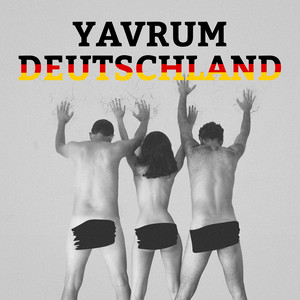
Yavrum Deutschland
Podcast · Society & perspectives

Audio, podcasts and new perspectives.

I have developed podcasts about decoding Web3 and post-migrant life in Germany. I am currently working on an AI podcast and a series about a future that is already part of everyday life.

04 / From the working archive

Film thinking, with a system.

My UEFA B-License has little to do with cameras and a lot to do with my work: systems function when people can find their bearings, make decisions and move together.

Structure with friction.

I bring enough structure to finish projects reliably, and enough unrest to stop the result from becoming wallpaper.

03 / From an open question to a finished project

How I work.

Think openly. Decide clearly. Deliver carefully.

01. Define the real task.

Before discussing formats or channels, we clarify the task, audience and goal. What should this project change? And how will we know it works?

02. Make the core idea visible.

I prefer to test a rough scene, frame or sequence early. It gives us something concrete to discuss and helps us find out whether the idea works.

03. Protect what makes it distinctive.

Strong projects often have a detail that initially seems too unusual, bold or unreasonable. That is often where their identity lies. We sharpen that detail instead of smoothing it away too soon.

04. Deliver reliably.

Documenting decisions, maintaining schedules, checking exports and preparing handovers are part of creative work. Chaos can inspire the project, but it should not write the final invoice.

04 / Experience and practice

Projects and experience.

Animated pixel portrait of Cem Tekin.

Cem Tekin.

Filmmaker · Creative Producer · Futurist
Berlin.

CV & selected work
01

Creative production at CLOCKKNOCK.

At CLOCKKNOCK GmbH, I follow projects from the first idea through to release. I connect creative work, client goals, teams, budgets and schedules while protecting the thought that makes the project distinctive.

02

Film direction with EXOSOLAR FILMS.

With EXOSOLAR FILMS, I develop cinematic and speculative work. There is room for ambitious imagery, unusual storytelling and projects that leave space for the audience to feel for themselves.

05 / What shapes my work

Film. Theory. Practice.

What I watch, read and try shapes the questions I bring to my work.

My film diary is a working archive.

On Letterboxd, I keep track of what I watch. I pay attention to how editing, framing, and rhythm guide a story—and which choices I want to develop in my own work or avoid. Questionable double features belong in the archive too.

Getting Things Done keeps my head clear.

I work with David Allen’s Getting Things Done (GTD). I capture tasks and ideas in a system I can trust, define concrete next actions and regularly review what is still open. That helps me keep track of productions and leaves room for creative work.

The stage shows whether an idea holds up.

At the writers' academy of the Neuköllner Oper, text became a rehearsal in a room. That is where rhythm, language, and transitions quickly reveal whether they work. I take the same test into other projects: show early, observe closely, revise with purpose.

06 / Notes from the moving edge

Working notes

Notes on film, production and AI – and what I learn along the way.

Note 02 · PrototypingPrototype the argument.A rough thing you can react to beats a beautiful idea nobody can test.Read note

Treatments and decks are useful until they become hiding places. The moment an idea depends on timing, framing, tone, or interaction, I want to see a version of that behavior. It can be ugly. It just has to make the central claim tangible.

A prototype is not a miniature final product. It is a question with edges. It tells us what the project believes, where the risk lives, and which disagreement is worth having now rather than three days before delivery.

Read the operating system
Note 03 · ProductionProduction is translation.The work moves when ambition, time, money, and people can understand one another.Read note

Production is often described as control. I think it is closer to translation: turning a feeling into a decision, a decision into a sequence, and a sequence into something every discipline can act on without flattening the original nerve.

The schedule, treatment, call, naming convention, and final check are not administrative debris around the creative work. They are how an idea survives contact with reality. Good structure should carry intention, not replace it.

Continue through the experience layer
Note 04 · Future formatsFutures need memory.New formats become interesting when they remember why old ones mattered.Read note

The future rarely arrives as a clean break. It drags conventions, rituals, forgotten interfaces, and unresolved cultural arguments behind it. That is good news: the richest new formats usually begin by misreading something old in a productive way.

I am less interested in predicting the next platform than in asking what people will still need inside it: orientation, surprise, recognition, and a reason to care. Technology changes the container quickly. Human attention carries a much longer memory.

Go to the deeper layers
Note 05 · SystemsSystems need room for people.A system is only intelligent if humans can move inside it without becoming its error message.Read note

Whether it is a football shape, a production plan, or an AI workflow, the diagram is never the work. The work begins when real people interpret it under pressure, bring information the system did not anticipate, and occasionally make the correct decision for reasons the model cannot see.

I like systems that make the next useful action obvious while leaving enough air for judgment. Too little structure creates fog. Too much structure turns exceptions into failure. The interesting zone is the one that helps people coordinate without sanding away initiative.

Return to the playground

The working loop

  1. 01Observe the tension
  2. 02Frame the question
  3. 03Prototype the argument
  4. 04Finish with care
Reading room

Note 01 · AI & taste

Fast tools. Slow judgment.

Speed is useful. Taste is what decides where to stop.

AI can multiply images, voices, routes, and plausible answers before the coffee gets cold. That is a production advantage, but not yet a point of view. A larger pile of options only becomes useful when somebody can say which one has a pulse and which one merely has polish.

I treat new tools as an extension of the sketchbook: good for reaching the argument earlier, exposing weak assumptions, and making an idea visible enough to disagree with. Judgment remains deliberately slow. It has to remember context, people, and the fingerprints that make a piece feel made rather than generated.

See the signals behind the work

07 / Next experiment

Let's talk about it.

Planning a film, a campaign or a new format? Tell me what you have in mind and where you need support. We'll work out the next step together.

Or directly: hi@cemtekin.de